Most players restring when the strings break. That is the longest interval you can pick, and for strings that stay alive a long time it is also too long. A string loses tension from the first hours after it comes off the machine, and a string that has not snapped can be well past its best.
Why strings go before they break
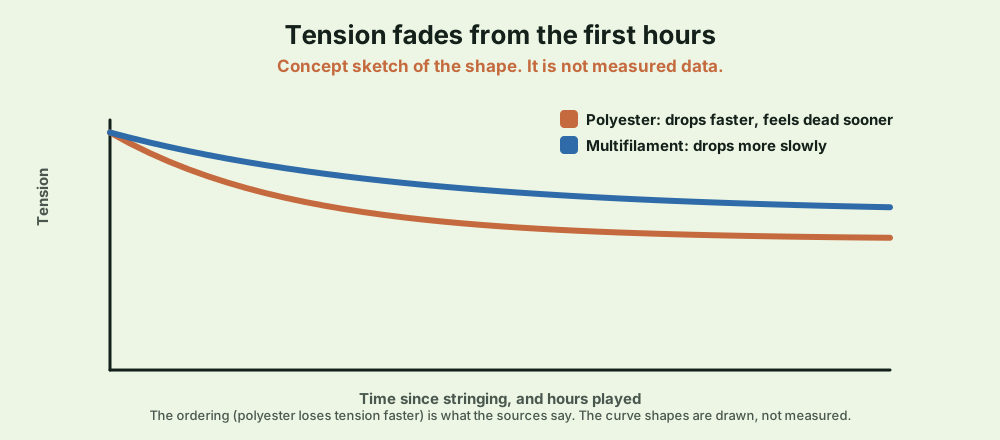
Strings begin losing tension as soon as the racquet leaves the stringing machine. As tension drops you lose control and you can’t generate as much topspin, and the effect is bigger with polyester. A stringer’s guide on the LTA’s ClubSpark site says some types can lose up to 10 per cent of their tension in the first night. Wilson adds that polyester strings wear out even faster when they are left in heat or sun.
 Illustration
The rules of thumb
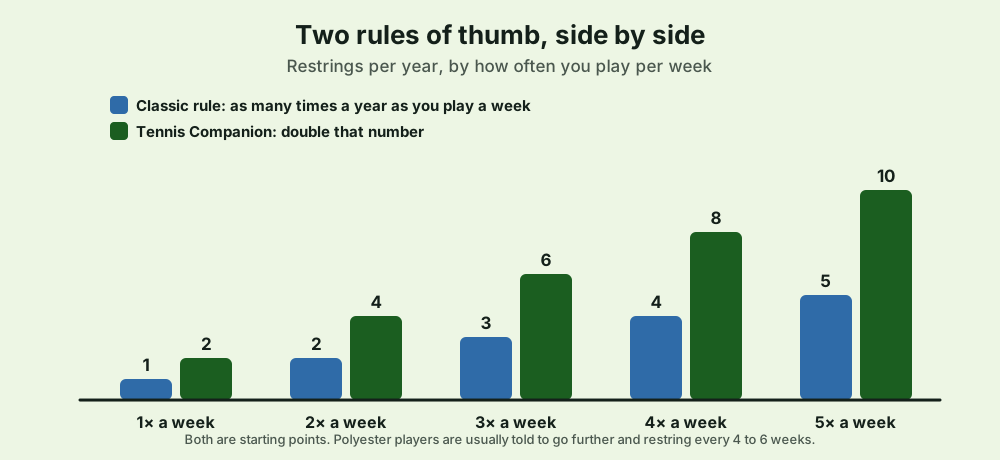
The classic rule is to restring as many times a year as you play in a week. Play three times a week and you restring three times a year. Tennis Companion calls that rule outdated, because few of us play the same number of times every week, but keeps the idea behind it: the more you play, the more often you restring. If you play about the same each week, its suggestion is to double the number.
If you play polyester
Polyester is the string that breaks last and goes flat first. One club stringer’s guide suggests restringing polyester every four to six weeks, because it loses tension much faster than other strings. Wilson says the same in general terms: polyester loses tension quicker than multifilament.
Signs it is time
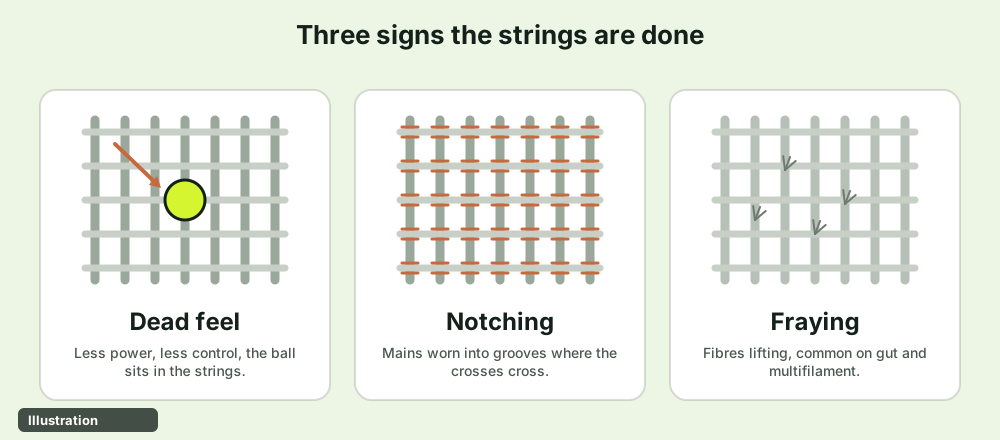
- The strings feel dead, with less power and less control.
- Notching: the mains have worn grooves where the crosses cross them.
- Fraying: fibres lifting on gut and multifilament as they get close to breaking.
 Illustration
Breaking strings too often?
If you snap strings more often than you would like, Wilson suggests moving to polyester, in the mains or in the crosses, for more durability. If you carry more than one racquet, restring them together so they play the same.
Arm and elbow
If you have elbow or arm problems, the same sources say to restring more often, because tired strings put more of the work on you. If that is you, check with a physiotherapist or your coach too, not only with a stringer.
A simple plan
- Write the date on the racquet bag or in your calendar when you string.
- Pick an interval from the rules above and adjust it by feel.
- Restring sooner for polyester, sooner for heavy hitting, sooner if your arm hurts.