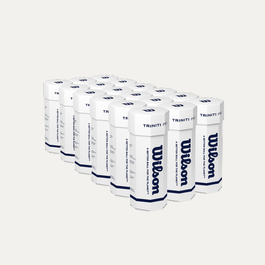
Wilson Triniti Pro
A pressureless ball with a recycled-felt covering and a flexible engineered core — the most structurally different ball in this batch, built around lasting longer rather than matching the classic pressurised feel exactly.
What the sources agree on
Pressureless balls don't rely on trapped internal air to keep their bounce, the well-documented mechanism behind their main selling point: they don't go dead the way a pressurised can does after a handful of sets, because there's no pressure differential to leak out in the first place. The recycled felt covering is Wilson's own sustainability angle for this specific line, a genuine material difference from the virgin-wool felt on the other two balls reviewed here.
Where they disagree
Pressureless construction has historically played firmer and less lively off the strings than a fresh pressurised ball, even if it stays more consistent over its longer life — whether Wilson's 'flexible engineered core' meaningfully closes that feel gap versus older pressureless designs is exactly the kind of claim we'd want our own bench and on-court test to confirm before taking the marketing copy at face value.