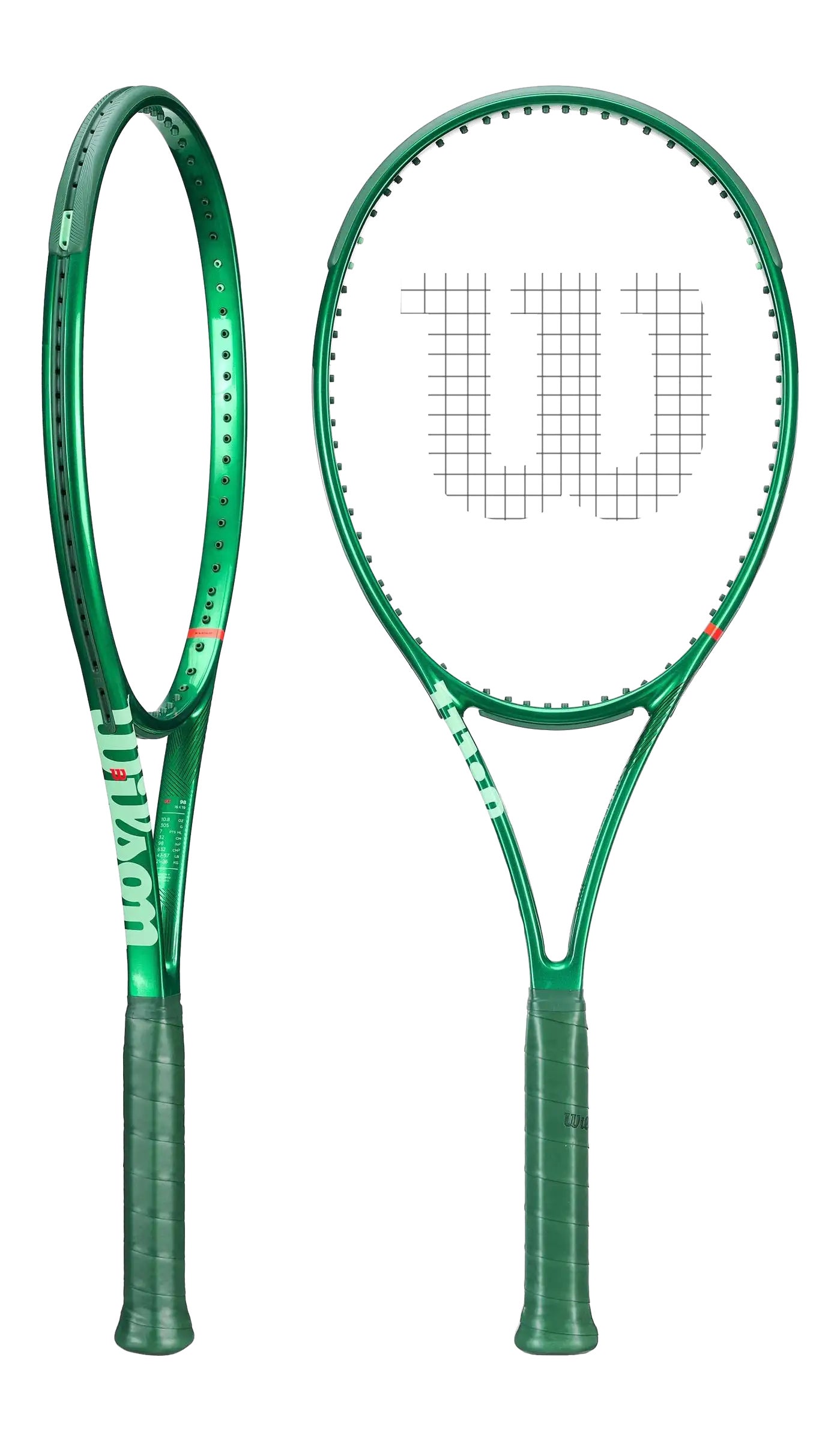
Wilson Blade 98 16x19 v10
A sample review for testing the trainer pages. It shows how a trainer might set up a Blade 98 v10 with a polyester and synthetic-gut hybrid, following the TennisArena calculator, and explain the reasons for each choice.
Who this setup is for
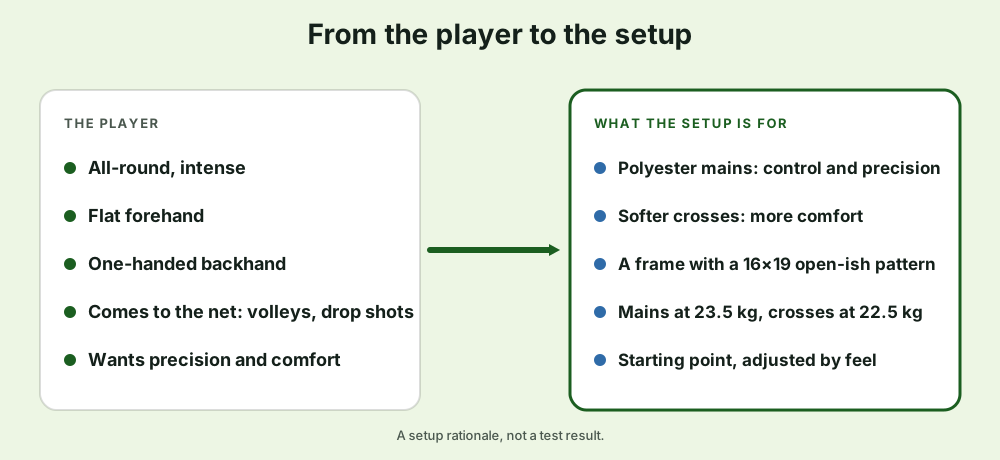
The player is an all-rounder who plays intensely: a flat forehand, a one-handed backhand, and a habit of coming to the net to volley and play drop shots. What this player wants from a frame and strings is precision, and comfort as well. The setup below is built around those two words.
 Illustration
The frame
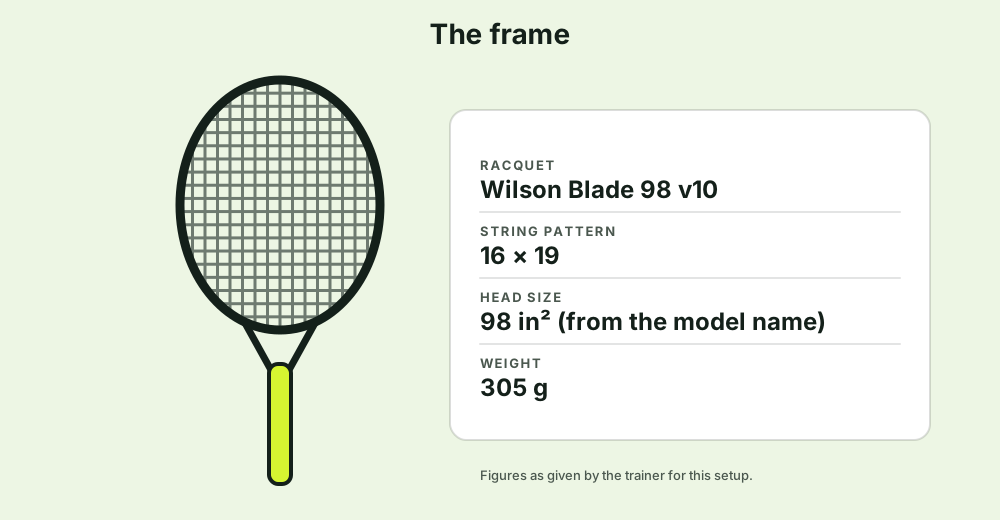
The frame is the Wilson Blade 98 v10 in the 16 × 19 pattern, at 305 g. It has a 98 in² head and a 16 × 19 string pattern. These are the figures the trainer gave for this setup.
 Illustration
The strings and the tensions
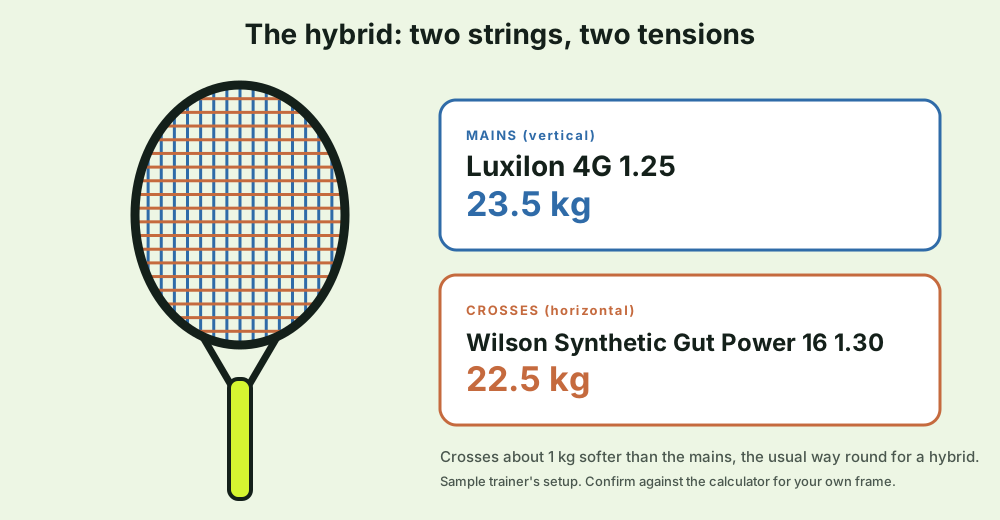
Mains: Luxilon 4G 1.25 at 23.5 kg. Crosses: Wilson Synthetic Gut Power 16 1.30 at 22.5 kg. This is a hybrid: a polyester in the mains, for control and durability, and a softer string in the crosses, for comfort. Putting the crosses about 1 kg below the mains is the usual way round for a hybrid, and the setup follows that practice.
 Illustration
How the calculator was used
The trainer used the TennisArena tension calculator as the starting point: pick the frame, pick how you play, read the proposal, then adjust. The calculator’s proposal is a number to begin from, and the final tension is a decision made by feel on court. Check your own frame in the calculator rather than copying these numbers.
What the setup is meant to do
Polyester mains are meant to give the placement a precise player wants, and to keep their shape between restrings. The softer crosses are meant to make the bed feel less harsh on contact. For a player who volleys and plays drop shots, a bed that stays predictable matters. Give any new setup a few sessions, and be ready to move the tension by half a kilo either way.
“The mains give me the precision, the crosses give me the comfort, and the calculator gave me a place to start from.”