Babolat
RPM Blast 1.25
Nadal's long-time string of choice, and the one string in this batch with a full set of published durability figures: 12% tension loss at 24 hours and a roughly 15-hour typical restring interval.
Where they agree
The octagonal cross-section is a real, measurable geometric difference from the round profile most strings use, and an octagonal shape is the established mechanism behind extra …
Where they disagree
A 15-hour typical restring interval is Babolat's own guidance rather than a figure we've reproduced on our own stringing machine, and 'typical' inevitably varies by string …
Low confidence
Written from the manufacturer's published specification and this product's own catalogue record; not yet …
Product page
Full review →
Babolat
Pure Drive 2025
8.3
Same 100 in²/300 g frame size as the Pure Aero, but a noticeably stiffer 72 RA — the spec behind this racquet's reputation as Babolat's power-first, not spin-first, tour frame.
Where they agree
Weight, head size and balance are close enough to the Pure Aero that the derived stability and manoeuvrability numbers land in a similar range, but RA …
Where they disagree
A higher RA is also the spec most associated with a harsher feel on off-centre contact, and that's exactly the trade-off we can't confirm without a …
Medium confidence
Written from the manufacturer's published specification, this product's own catalogue record, and the two …
Product page
Full review →
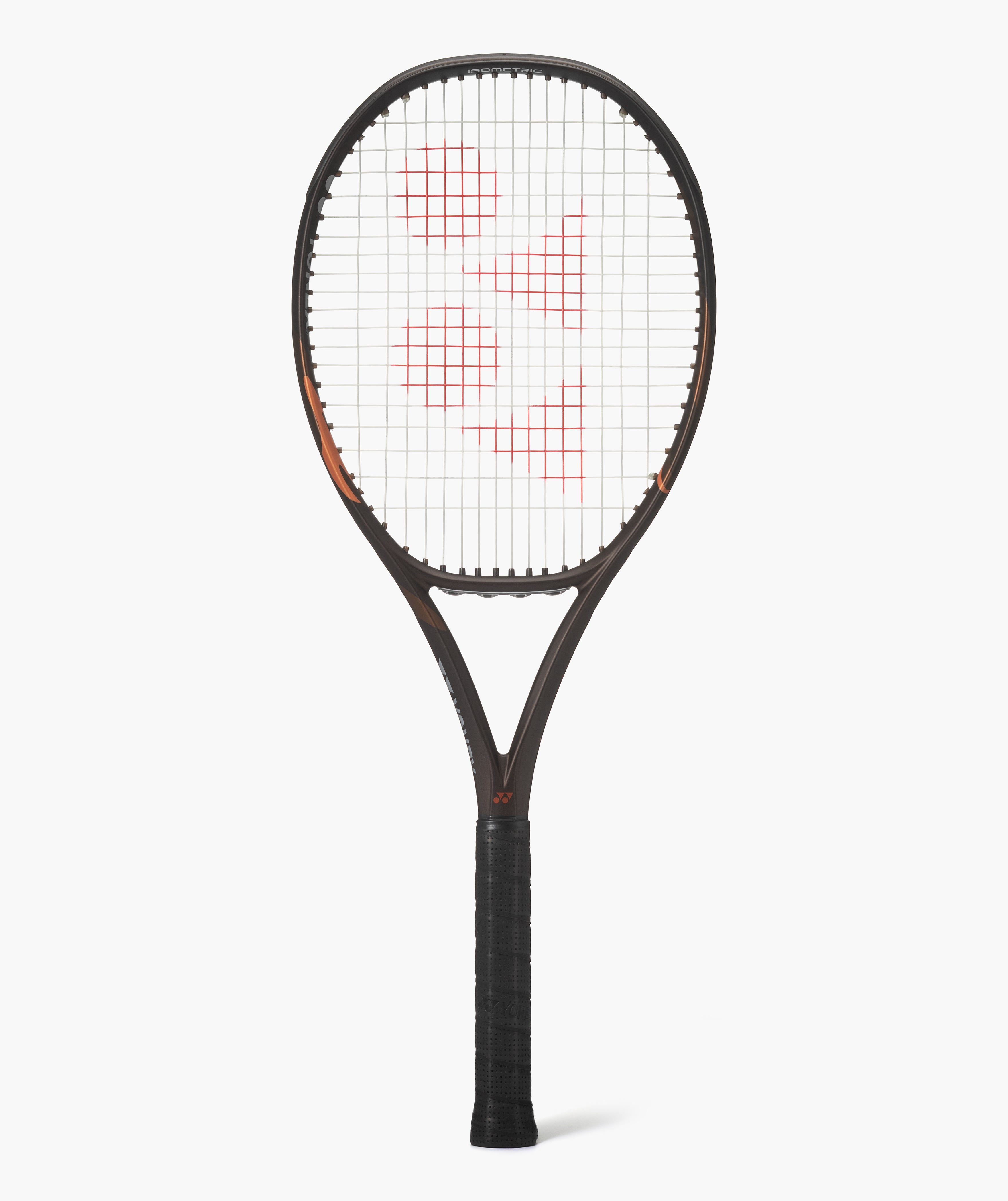 Yonex
EZONE 98L (285 g)
8.3
Yonex
EZONE 98L (285 g)
8.3
A lighter-build 98 in² frame at 285 g with an unusually wide 18–24 kg tension range — the 'L' signals Yonex's own easier-swinging variant of the standard EZONE 98.
Where they agree
At 285 g unstrung, this is lighter than every other racquet in this batch, and lighter frames are the clearest, least-disputed lever for manoeuvrability — the …
Where they disagree
Lighter, more head-light frames are also the ones where technique matters most to the outcome — a clean, well-timed swing gets the manoeuvrability benefit with little …
Medium confidence
Written from the manufacturer's published specification, this product's own catalogue record, and the two …
Product page
Full review →
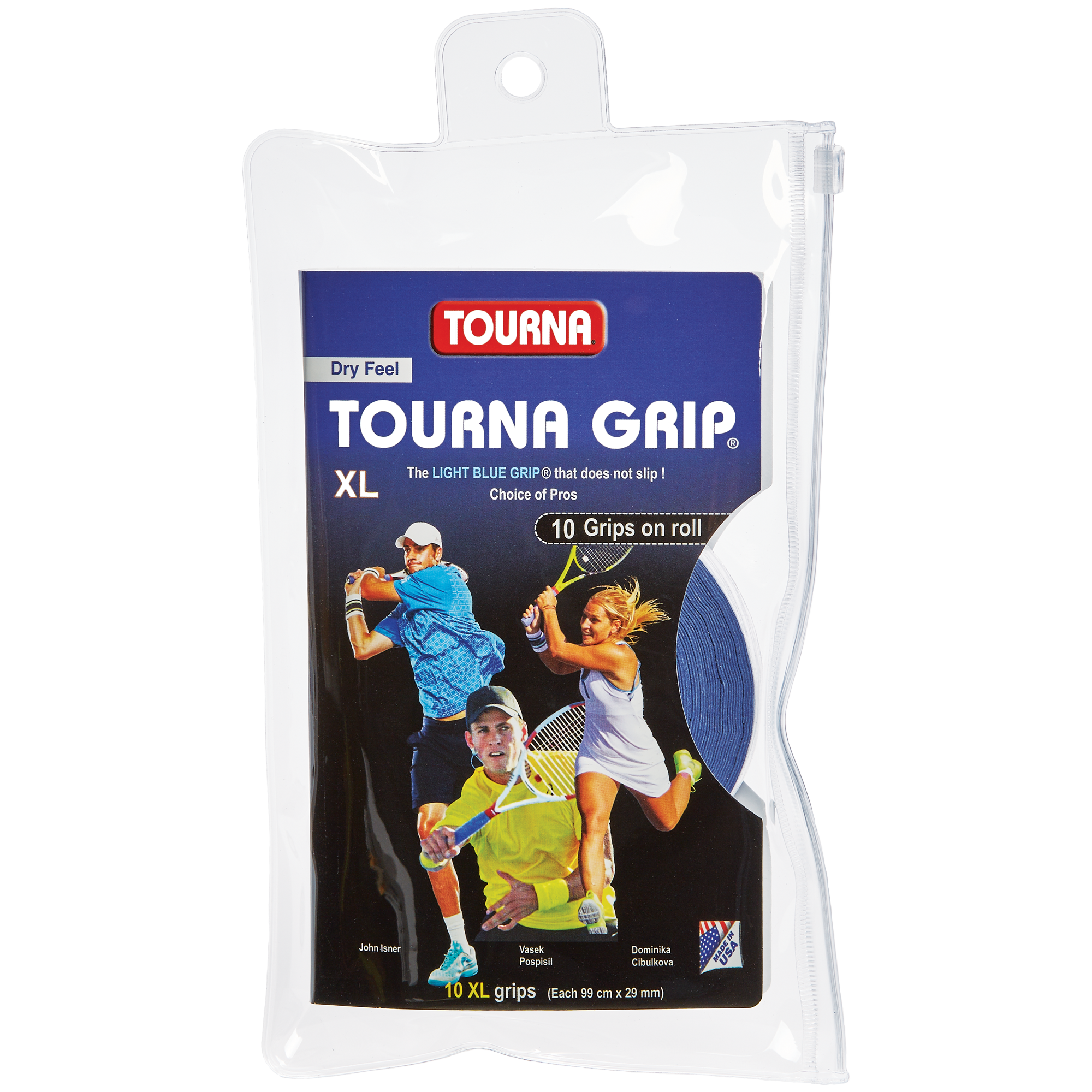 Tourna
Grip Original XL
Tourna
Grip Original XL
A dry-feel, high-absorption overgrip — the opposite end of the tack spectrum from Wilson's Pro Overgrip above, and one of the longest-standing, most recognisable names in this specific niche.
Where they agree
High absorption paired with a dry rather than tacky finish is a distinct, well-established category aimed specifically at players whose hands sweat enough that a tacky …
Where they disagree
Thickness isn't published for this listing, so we can't compare its build-up under the hand to the 0.60 mm Wilson overgrip above with real numbers — …
Low confidence
Written from the manufacturer's published specification and this product's own catalogue record; not yet …
Product page
Full review →
Babolat
VS Original
A thin, 0.44 mm tacky overgrip with medium absorption — noticeably slimmer than the Wilson Pro Overgrip above, which changes how it layers over an existing base grip more than the tack or absorption ratings do.
Where they agree
At 0.44 mm this is meaningfully thinner than the 0.60 mm Wilson overgrip in this batch — a real, measured difference that matters most to players …
Where they disagree
Tack and absorption are rated the same as the Wilson overgrip (tacky, medium), but rated categories don't capture everything — how a 0.44 mm build compares …
Low confidence
Written from the manufacturer's published specification and this product's own catalogue record; not yet …
Product page
Full review →
 Wilson
US Open Extra Duty
Wilson
US Open Extra Duty
The official ball of the US Open, in its Extra Duty felt built for hard courts — pressurised, ITF-approved, and about as close to a known reference point as a tennis ball gets.
Where they agree
Extra Duty felt is thicker and more durable than Regular Duty, the standard recommendation for hard courts specifically because the abrasive surface wears felt down faster …
Where they disagree
What we can't speak to yet is how this specific batch performs over its playable life — pressurised balls lose bounce as internal pressure drops with …
Low confidence
Written from the manufacturer's published specification and this product's own catalogue record; not yet …
Product page
Full review →
Wilson
Blade 100 v9.0
8.5
The 100 in² sibling of the Blade 98 v9 we've already bench-tested — same family, same control-first identity, one size up in head size, this exact model still awaiting its own bench check.
Where they agree
RA of 60 and a 322 swingweight put this in similar territory to the Speed MP 2026 above — soft-feeling on paper, stable through contact — …
Where they disagree
We're extrapolating from a sibling racquet's bench results here, which is a reasonable starting point given the shared frame technology, but it isn't the same as …
Medium confidence
Written from the manufacturer's published specification, this product's own catalogue record, and the two …
Product page
Full review →
Prince
Phantom 100P (310 g)
8.5
The heaviest frame in this batch at 310 g, paired with an open 16×18 pattern — two specs that point at a deliberate, plough-through frame for players who supply their own racquet-head speed.
Where they agree
At 310 g unstrung this frame carries more mass than any other racquet reviewed here, and more static weight is the most direct, least-disputed lever for …
Where they disagree
Extra static weight only pays off for players who can generate their own racquet-head speed — the same mass that stabilises contact also has to be …
Medium confidence
Written from the manufacturer's published specification, this product's own catalogue record, and the two …
Product page
Full review →
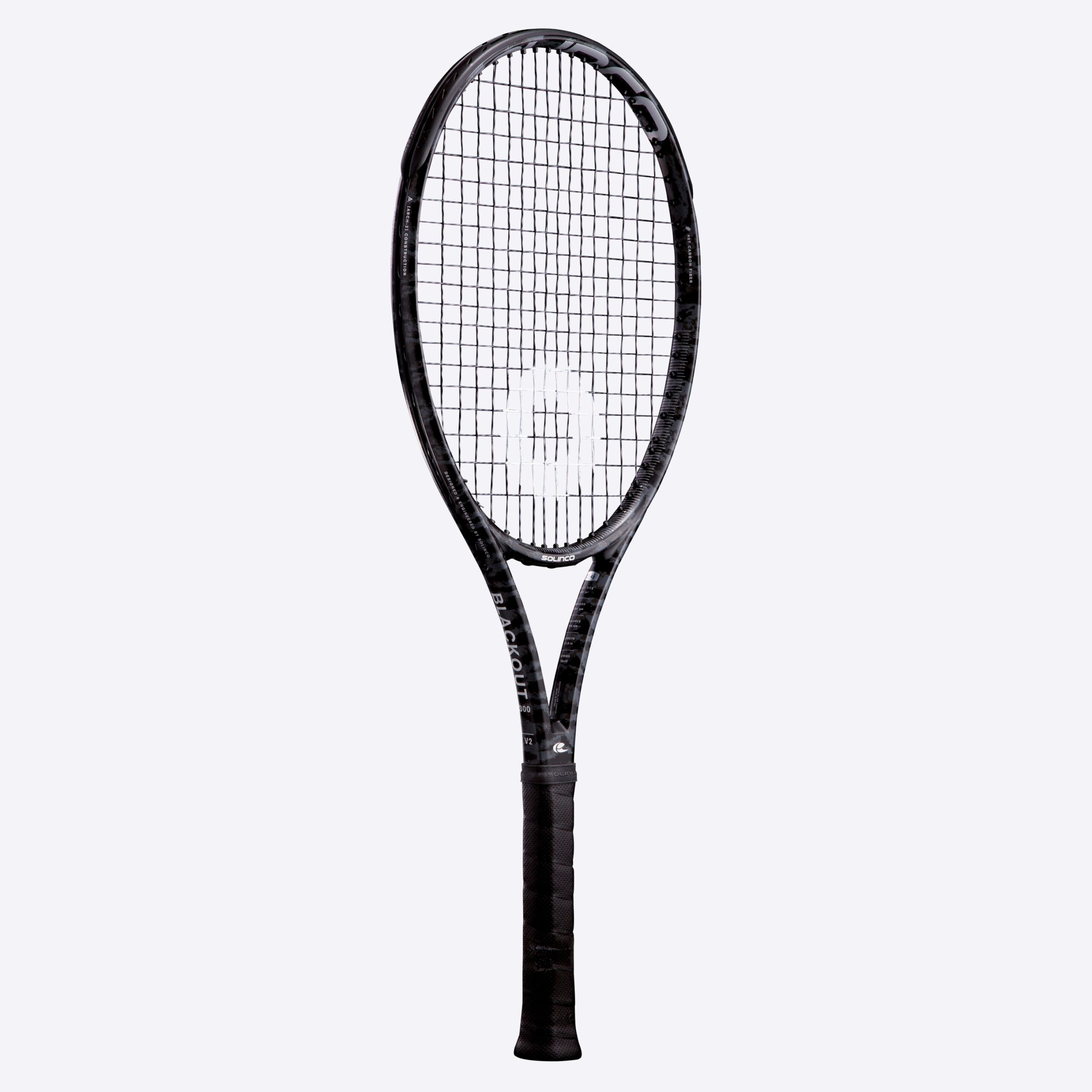 Solinco
Blackout 300 v2
8.4
Solinco
Blackout 300 v2
8.4
A 100 in²/300 g frame that reads almost as a direct spec twin of the Pure Aero above, aside from a slightly firmer balance point — Solinco's newer tour line built to compete head-on with the established players in this exact weight class.
Where they agree
300 g unstrung, a 16×19 pattern and a 31.5 cm balance put this frame within a few tenths of a centimetre of several other racquets in …
Where they disagree
Because the numbers are so close to several other frames in this list, spec comparison alone can't tell us what actually differs in feel — layup, …
Medium confidence
Written from the manufacturer's published specification, this product's own catalogue record, and the two …
Product page
Full review →
 Wilson
Pro Overgrip
Wilson
Pro Overgrip
A 0.60 mm tacky overgrip with medium absorption — the same weight class and tack profile that made this one of the most widely used overgrips on tour, on paper matching what its reputation would predict.
Where they agree
At 0.60 mm this sits in the standard overgrip thickness range (most overgrips run 0.5–0.7 mm), thin enough to layer over an existing grip without meaningfully …
Where they disagree
'Tacky' and 'medium absorption' are Wilson's own classification labels rather than a third-party measured grip-coefficient or moisture-uptake figure, so while the category is a reasonable, industry-standard …
Low confidence
Written from the manufacturer's published specification and this product's own catalogue record; not yet …
Product page
Full review →
Dunlop
ATP Official Ball
The official ball of the ATP Tour, in an All Court felt rated for both hard and clay surfaces — a genuinely dual-purpose, tour-validated choice rather than a budget compromise.
Where they agree
All Court felt, sitting between the abrasion-resistance of Extra Duty and the softer profile of clay-specific balls, is a real, well-understood middle ground for players who …
Where they disagree
A ball built to perform reasonably on two surfaces is, by the same logic, rarely the single best choice on either one specifically — a hard-court …
Low confidence
Written from the manufacturer's published specification and this product's own catalogue record; not yet …
Product page
Full review →
 Wilson
Triniti Pro
Wilson
Triniti Pro
A pressureless ball with a recycled-felt covering and a flexible engineered core — the most structurally different ball in this batch, built around lasting longer rather than matching the classic pressurised feel exactly.
Where they agree
Pressureless balls don't rely on trapped internal air to keep their bounce, the well-documented mechanism behind their main selling point: they don't go dead the way …
Where they disagree
Pressureless construction has historically played firmer and less lively off the strings than a fresh pressurised ball, even if it stays more consistent over its longer …
Low confidence
Written from the manufacturer's published specification and this product's own catalogue record; not yet …
Product page
Full review →
 Luxilon
ALU Power 1.25
Luxilon
ALU Power 1.25
The polyester string most credited with starting the modern poly era on tour — a 1.25 mm gauge with no published tension-loss or restring-interval figures on this specific listing, so its reputation currently outruns what we can verify here.
Where they agree
Polyester is well-established as the string type that best supports heavy topspin at lower tensions, because poly's stiffness lets the string snap back into place after …
Where they disagree
This listing doesn't carry a published tension-loss-at-24h or typical-restring-interval figure the way the RPM Blast does below, so while ALU Power's reputation for playability and relatively …
Low confidence
Written from the manufacturer's published specification and this product's own catalogue record; not yet …
Product page
Full review →
Babolat
Pure Aero 2026
8.4
A 100 in², 300 g spin-and-power frame built around an open 16×19 pattern — the numbers point at a baseliner who wants to load the ball with topspin without swinging harder.
Where they agree
At 300 g unstrung with a 32 cm balance and 320 swingweight, this sits in the same weight-and-balance band as most of the tour-level 100 in² …
Where they disagree
What we can't say yet is how that translates once you're actually playing with it — an open pattern that spins well for one swing style …
Medium confidence
Written from the manufacturer's published specification, this product's own catalogue record, and the two …
Product page
Full review →
Babolat
VS Touch Natural Gut 1.25
Natural gut rather than a synthetic material — the most expensive string in this batch, and the one whose reputation for comfort and tension-holding rests on decades of tour use rather than a single manufacturer's marketing copy.
Where they agree
Material is the single biggest lever for feel in a tennis string, and natural gut is the one material category every other string in this batch …
Where they disagree
This listing doesn't carry published tension-loss or restring-interval figures, so while gut's reputation for holding tension longer than poly is about as well-established as anything in …
Low confidence
Written from the manufacturer's published specification and this product's own catalogue record; not yet …
Product page
Full review →
 ProKennex
Ki Black Ace 105 (300 g)
8.5
ProKennex
Ki Black Ace 105 (300 g)
8.5
The largest head in this batch at 105 in², built around ProKennex's Kinetic comfort system — the spec sheet points squarely at a forgiving, arm-friendly frame rather than a compact tour blade.
Where they agree
A 105 in² head is significantly larger than the 98–100 in² frames that dominate this list, and head size is the least-disputed lever for a bigger, …
Where they disagree
ProKennex's Kinetic system markets specific vibration-dampening claims that go beyond what head size, weight and balance alone predict, and we don't have an independent way to …
Medium confidence
Written from the manufacturer's published specification, this product's own catalogue record, and the two …
Product page
Full review →
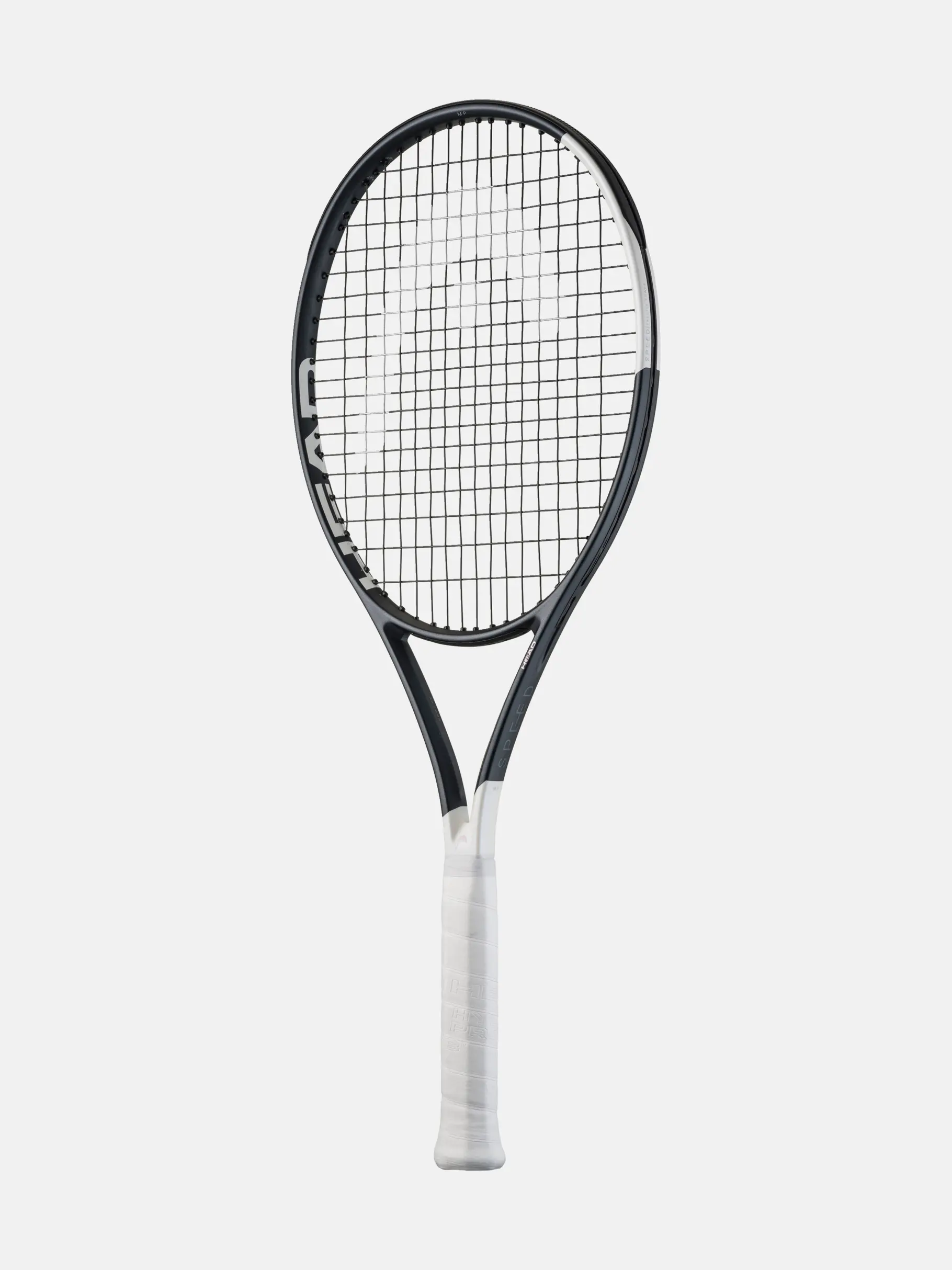 Head
Speed MP 2026
8.5
Head
Speed MP 2026
8.5
A 100 in²/300 g frame with a notably low 60 RA — among the more flexible tour-weight frames we've catalogued — built around the control-first identity Head's Speed line has carried for years.
Where they agree
The 329 swingweight is on the heavier side for this weight class, which the spec sheet alone predicts as a plough-through, stable-through-contact feel rather than a …
Where they disagree
Swingweight predicts feel under load reasonably well, but it doesn't fully capture recovery speed between shots the way an actual on-court test does — two frames …
Medium confidence
Written from the manufacturer's published specification, this product's own catalogue record, and the two …
Product page
Full review →
 Wilson
Clash 100 v3 Reverse
8.5
Wilson
Clash 100 v3 Reverse
8.5
100 in²/295 g with a markedly head-light 31 cm balance — the numbers behind Wilson's flexible 'FreeFlex' frame family, built to bend more than a typical stick without losing its shape.
Where they agree
The head-light balance at this weight is the standout figure: paired with the 9.3 manoeuvrability we derive from the specs, it's the most head-light, quickest-swinging frame …
Where they disagree
Wilson markets this frame's flexibility as its headline feature, but neither RA nor swingweight is published on this listing, so we can't independently confirm how flexible …
Medium confidence
Written from the manufacturer's published specification, this product's own catalogue record, and the two …
Product page
Full review →
Dunlop
FX 500 Tour
8.4
A 98 in² control frame at 305 g with the widest published tension range of any racquet here (20–29 kg) — a frame built to be tuned rather than played one way.
Where they agree
The smaller 98 in² head paired with 305 g and a 322 swingweight is a classic tour-control profile: smaller heads are the most consistent lever for …
Where they disagree
A 20–29 kg published range is unusually wide, and where a player actually strings within it changes the racquet's character more than almost any other single …
Medium confidence
Written from the manufacturer's published specification, this product's own catalogue record, and the two …
Product page
Full review →